Jicky Guerlain for women
Guerlain
Save to my notebook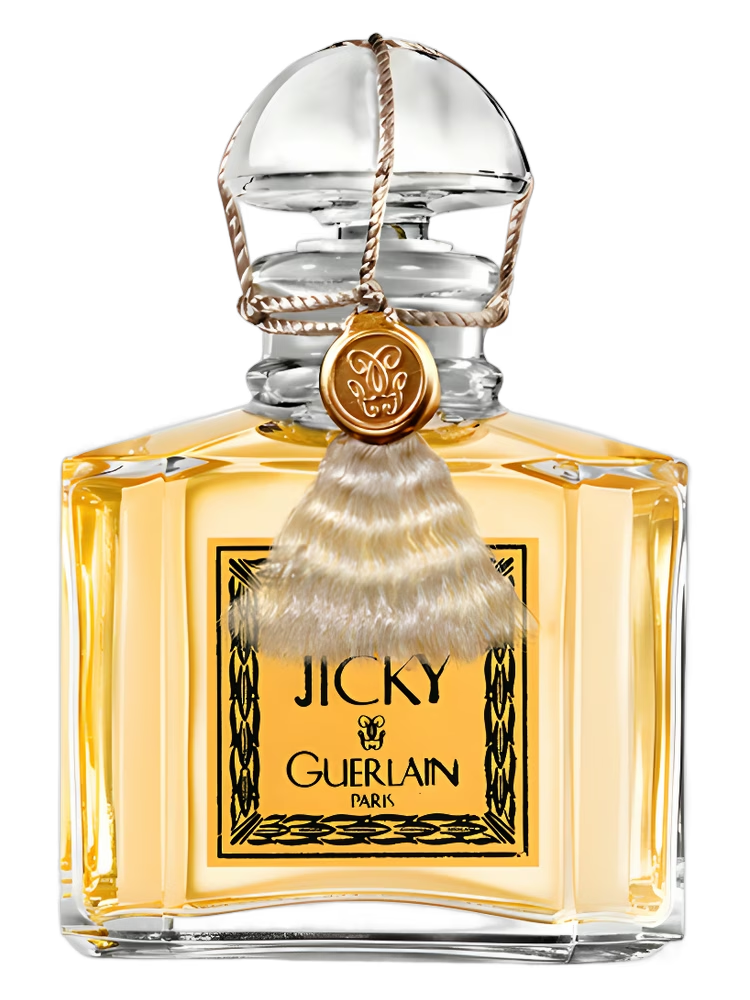
Jicky by Guerlain is a Oriental Fougere fragrance for women. Top notes are Rosemary, Bergamot, Lemon and Mandarin Orange; middle notes are Lavender, Tonka Bean, Orris Root, Basil, Jasmine and Ethylvanillin; base notes are Vanilla, Leather, Spices, Benzoin, Sandalwood, Amber and Brazilian Rosewood.
Scent
aromatic · fresh spicy · citrus
Top notes
Rosemary, Bergamot, Lemon, Mandarin Orange
Heart notes
Lavender, Tonka Bean, Orris Root, Basil, Jasmine, Ethylvanillin
Base notes
Vanilla, Leather, Spices, Benzoin, Sandalwood, Amber, Brazilian Rosewood
Source details
Description
Jicky by Guerlain is a Oriental Fougere fragrance for women. Jicky was launched in 1889. The nose behind this fragrance is Aime Guerlain. Top notes are Rosemary, Bergamot, Lemon and Mandarin Orange; middle notes are Lavender, Tonka Bean, Orris Root, Basil, Jasmine and Ethylvanillin; base notes are Vanilla, Leather, Spices, Benzoin, Sandalwood, Amber and Brazilian Rosewood. Jicky was created in 1889. It is a classical fragrance and, despite the age, it is timeless and still very modern. According to the legend, the perfume was named after a girl Aime Guerlain was in love with when he was a student in England. It is more likely, though, that this perfume is named after his uncle Jacques Guerlain’s nickname – Jicky. This was one of the first perfumes created with addition of synthetic materials (the first was Fougere Royale Houbigant, 1882). The top notes contain lavender and citrus (bergamot, lemon and mandarin), which perfectly match the cold, metallic orris and rose shaded by vetiver. The cold top and middle notes are an elegant counterbalance to the warm base created of patchouli, vanilla, amber and musk. As Guerlain has always paid a lot of attention to design of flacons, this bottle is also attractive and original: it is designed in a shape of 19th century medicine bottle with champagne cork shaped stopper.
More scents
lavender · vanilla · woody · amber · powdery · warm spicy · sweet
Scent notes describe a smell. They do not confirm ingredients or safe amounts.